Wrong's Turn
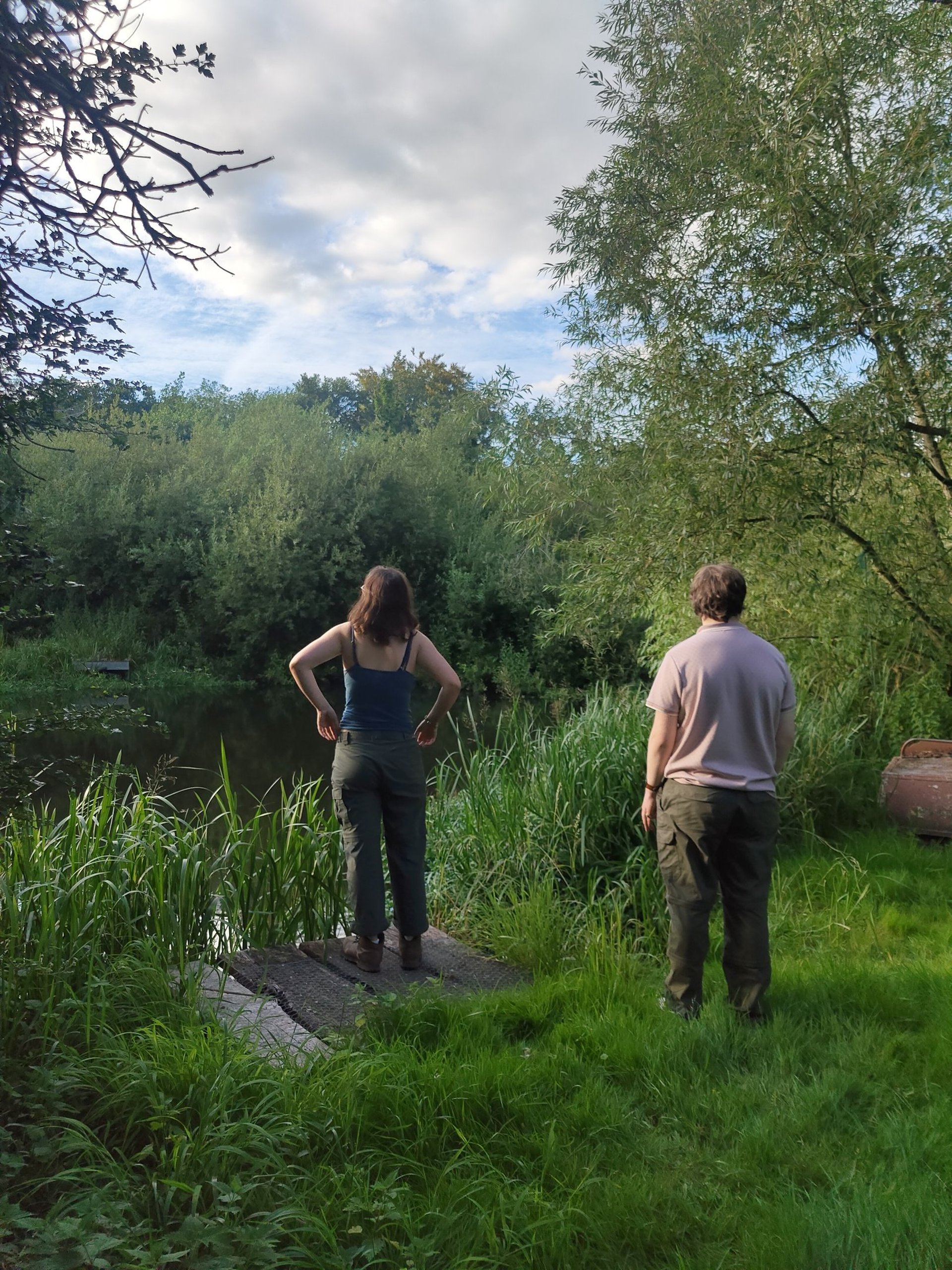
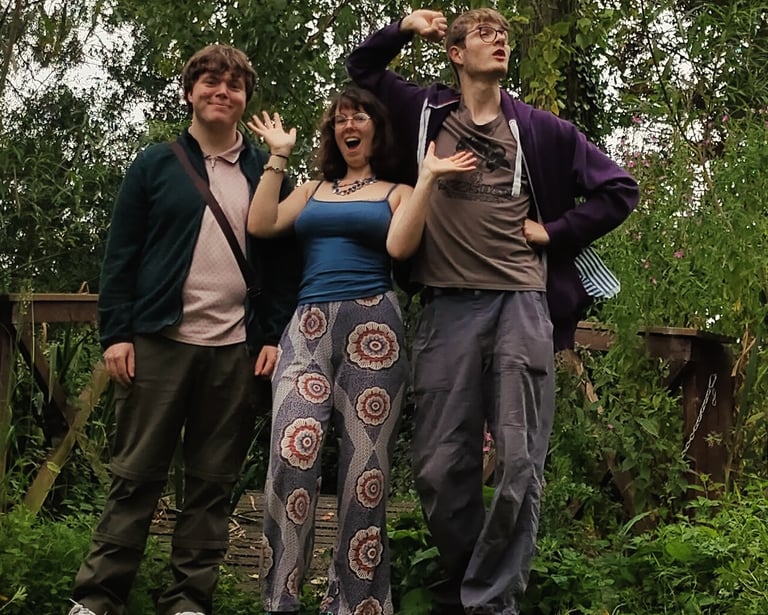
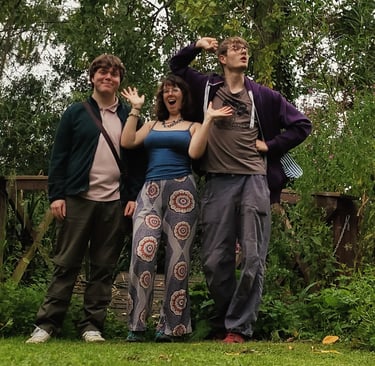
Between the 3rd and 10th of August 2024 in the Norfolk countryside, Wrong’s Turn took place. There were three participants in the project: Fynn Courtney, Pip Thomson and Stella Vollum. The goal was to write, perform and record a 10-song album in a week, while exploring strategies to encourage creativity and collaboration.
5/29/20266 min read
Context & Preparation:
I am personally close with both of the collaborators for this project, but we haven’t worked together creatively previously, besides a few performances (I have been an accompanist for them). Both are competent musicians, with their main instruments being the voice. The intention was that being able to discuss personal issues openly would allow for more creative freedom, and the novelty of not having worked together would mean the necessity for good environment and strategy.
The first step was research into creativity and pedagogy practices (see bibliography). From this, the idea of balancing structure and freedom stood out, or as put by Stravinsky, ‘The more constraints one imposes, the more one frees oneself’. Given the limited time, I wanted to have as much decided beforehand as seemed reasonable. Other key points included, the importance of critical reflection and adaptability, and the consideration of expectations and outcomes -making sure everyone is on the same page at all stages of the process.
Creative Strategy:
We decided that if we didn’t manage to complete the challenge, or our songs were bad, the project could still be a success. It was made clear to all participants that the main outcome of the project wasn’t an album, or a performance, but the actual process itself, while having artefacts to show for it is added motivation and gives a sense of purpose. In the spirit of the challenge, all lyrics and music should be fully formed within the week, although it is okay to bring ideas as starting points. I came to the conclusion that solid structure and planning would allow us to be most free to write during the week. Some of the strategies before the album included having online meetings to plan the album, sharing an inspiration playlist (here), and preparing some materials to help us with our writing.
Before the project began, we had a plan for the album; it was going to tell the story of a small group of musicians on their journey home after a gig. Starting with their final song, a pub song, and a goodbye song, the album would delve into introspection as though staring out the window of a car at night, getting lost in your emotions. The album would conclude with the arrival home. By preparing a clear narrative and style beforehand, it ensures we’re on the same page creatively, and allows for easier independent work, as you can go off and work on starting a particular song. We found this to be particularly effective, since it meant we could go off on our own if we needed space and still be contributing to the collective work.
Daily Reflection and Adaptation
Given that the project would run over a week without any time in between, it is important to incorporate reflection into the daily practice. I had the idea of making a Google Forms journal that we would each have to do at the end of the day. It usually took about 10 minutes and contained easy-to-answer questions about how the day had gone. See the documentation folder or here for a copy of the form, data from the responses is also in the documentation folder. The aims for this was to encourage reflection at the end of each day, and journaling for well-being. Asking questions like ‘do you feel you’ve achieved what you’d have liked today’ and ‘how productive has the day felt’, with numeric or yes/kinda/no answers, were to encourage thought of what’s going well and what isn’t. Tracking mood, sleep and a journal were primarlily for well-being, but as shown in the data well-being and feeling productive are very closely tied. My understanding is that when we had a good day, we felt good in ourselves and had fun, which made the writing more productive. However, I understand this is not a proper scientific study! That said, I do feel like by reflecting it allowed us to adapt and understand what we found helpful; for example days where we did a vocal warmup in the morning we were generally more productive, and that we were better at writing in the morning than the afternoons, but our rehearsals were good in the afternoons. We also noticed that when we felt too much pressure to ‘work’ it became stressful, and harder to ‘work’. I feel like the daily reflection was a particularly useful thing that we did, though we regularly had conversations with one-another about how it was going and what we can change.
The performance
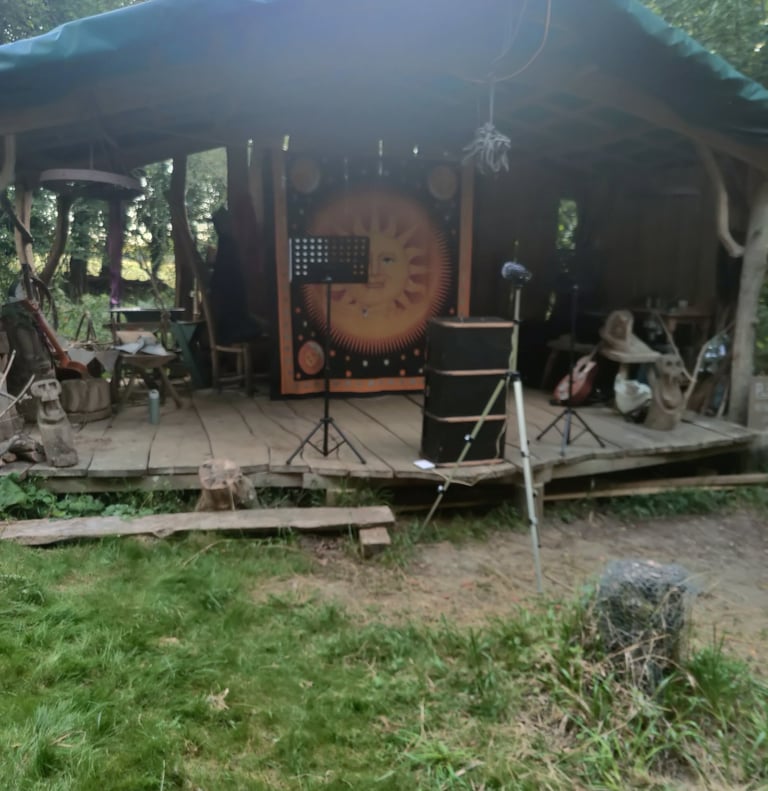
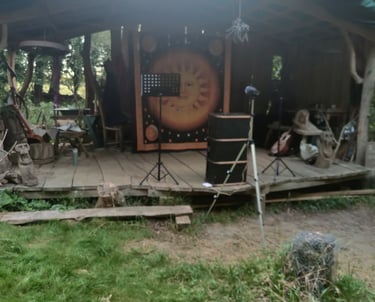
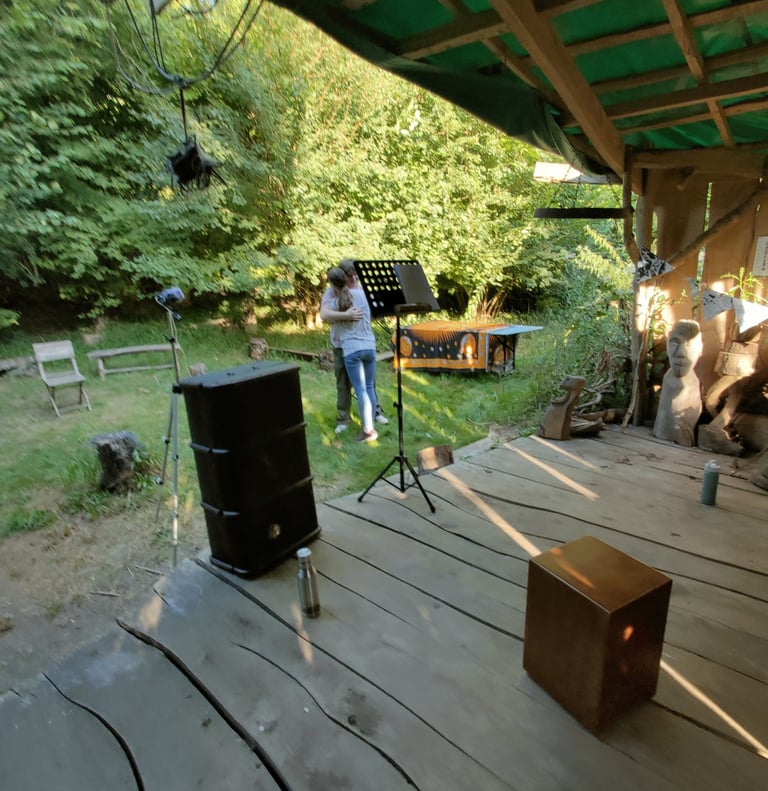
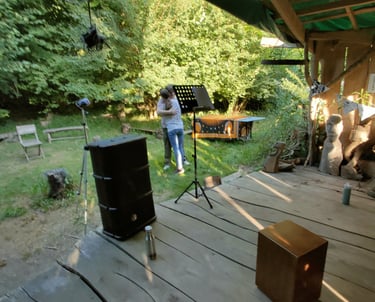
At the end of the week, we had the opportunity to perform a small concert in a woodland shelter, at a place called “Wrong’s Covert’. The experience was so rewarding, and it felt like a great conclusion to the week. We received joyous feedback on our new material too.
Conclusion
The name ‘Wrong’s Turn’ comes from Wrong’s Covert, the place we performed, and The Turn, the name of the road Pip’s house is on and where we wrote and recorded the music.
The project was a great experience, and I am so pleased we did it. On reflection, the structured approach was very helpful, and in fact the week itself could have been better structured, we had loose plans for what we wanted done by when, and we had a few key trips and activities planned but besides that the days often felt unstructured, which I think was problematic as it meant we didn’t always feel like we took full advantage of a day, or we did too much in a day. I think that the performance was a highlight, and actually, going forward, I’d like to incorporate more performance into similar projects. That could be at the end of each day we play something to one another, or as a group to others (such as family or local friends, etc.),we could also do more rehearsals and play together. The critical reflection, and having open conversations, was great, though I think asking how productive you felt led to negative feelings on less productive days.
Throughout the project, I personally enjoyed the challenge of getting ideas out of others ‘ heads, especially Pip, as it was his first time ever writing songs. I did write most of the music, as I was the primary ‘instrumental player’ and most experienced in this area, and I think at times the others found it difficult to keep up. Thankfully they felt comfortable enough to express this, and I could slow down and focus on taking the role of an enabler. By the end we all felt happy with our contributions. I learned so much about creativity and working with people during this project, I couldn’t be more pleased. All I learned from Wrong’s Turn had a huge knock on effect for all my creative output in the year since.
Moment’s Past & Engineman
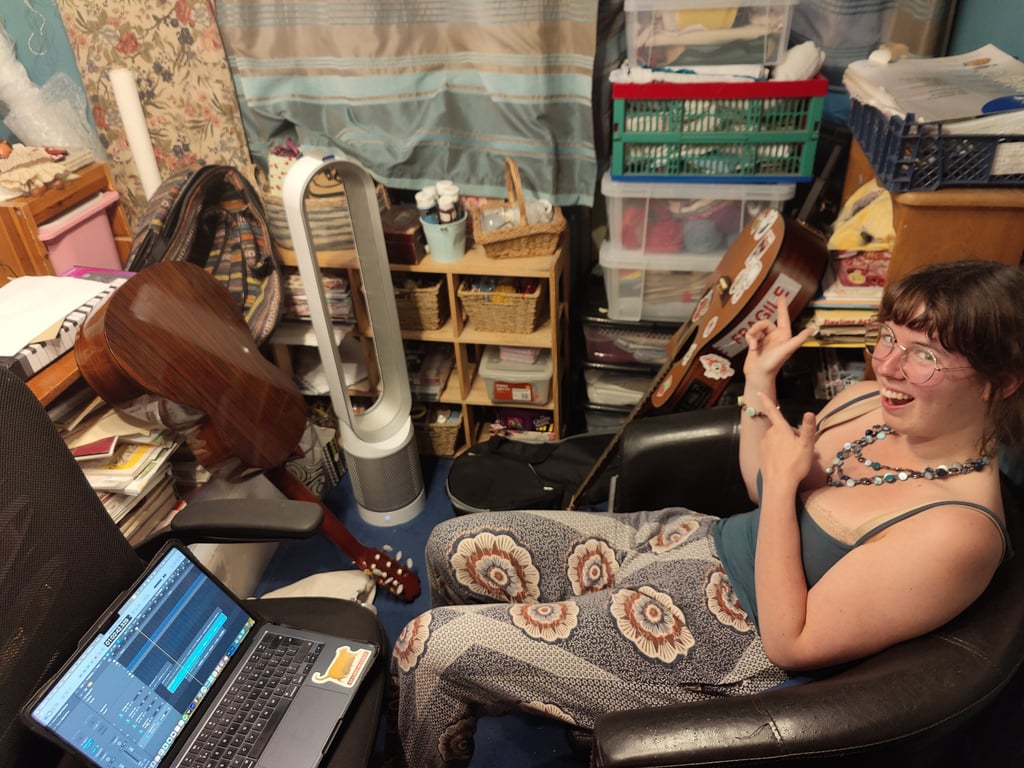
I’d like to present some of the music from this project and briefly explain why these songs showcase the project so well. The recording took creativity too, I had a mixer/interface with two pairs of mics (AKG 214s, and Rode M5s), and a Tascam portable recorder, that also doubles as an interface. I set up a sewing room as our ‘control room’ with speakers, and we used sofa cushions to deaden the acoustics. This is mostly where we recorded vocals, as the hall was often noisy with people and animals moving around, it was also a base of operations for writing and planning.
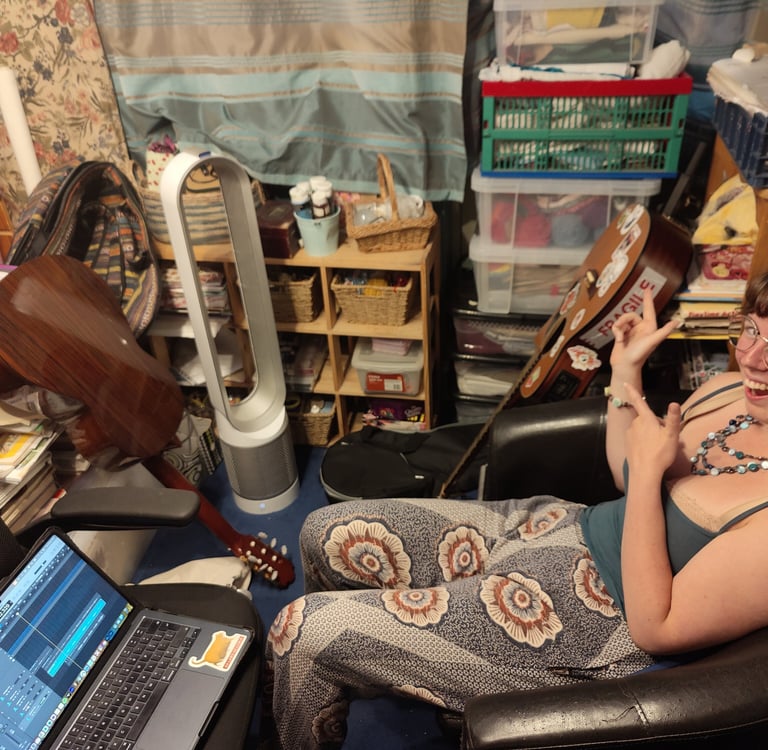
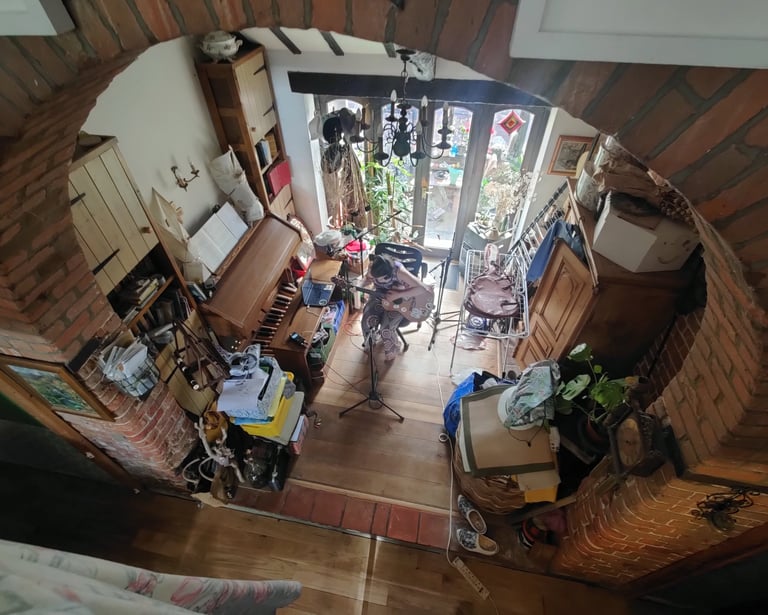
Pip’s lovely (+massive) house, where the album was recorded, had a hall with an old baby grand piano, and an organ. The hall had a unique and great acoustic, so it was my first choice for recording all instruments. The song Moment’s Past, which is the conclusion to the album about stepping out into the cold night air, knowing you’ve reached the end of your journey, with the last steps till your bed, is a great demonstration of the sound of the space. We recorded an improvisation at the end of a long and emotionally intense day. Pip sat at the organ, playing this chord, and we couldn’t help but join in (I played bass, Stella played piano). I later wrote the lyrics in the form of a poem (see in Wrong’s Turn Lyrics), and sang the poem in a style inspired by Thom Yorke’s Dawn Chorus. We later overdubbed percussion and clarinet (kudos to Pip’s mum for playing clarinet) in the same room. Due to the limitations in equipment, I chose to take a holistic approach to recording and take advantage of the gorgeous room sound, opting to utilise the spill meaningfully and not fight it.
-Fun note, we had to de-tune the organ and other instruments to match the piano.
central hob
centralhobrecords@gmail.com